Introduction
Climate change has become one of the most pressing challenges of the 21st century. In response, countries across the globe are adopting ambitious climate laws, including carbon pricing, emissions trading systems, energy transition strategies, and fossil fuel phase-outs. These laws aim to steer societies toward decarbonization, reduce global temperature rise, and protect ecosystems for future generations.
While the environmental necessity of such regulations is beyond debate, their social consequences remain highly contested. Climate laws, though designed to serve the public good, often impose unequal burdens across different income groups, regions, and occupations. These inequalities can lead to social unrest, political resistance, and declining trust in democratic institutions.
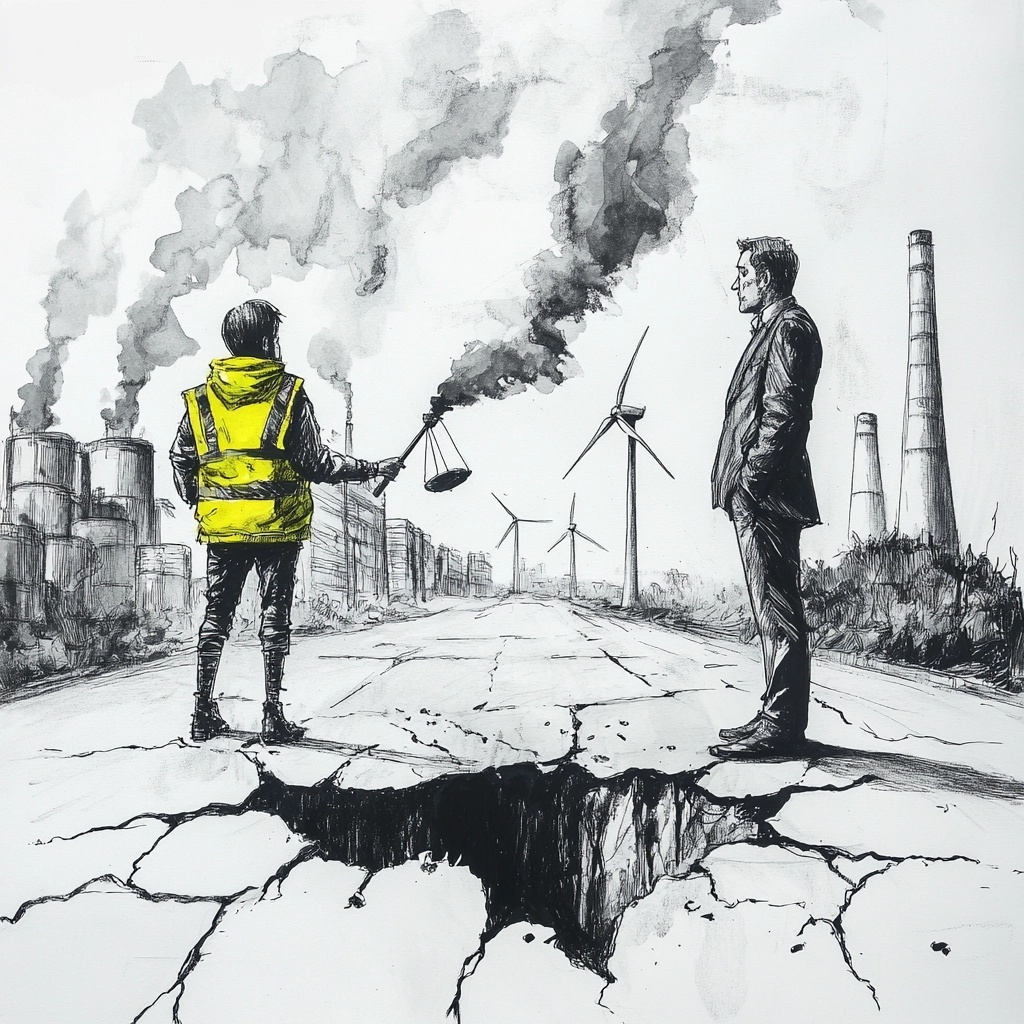
This article critically analyzes the social impacts of climate laws, with particular focus on the distributional effects, political legitimacy, and the necessity of a just transition. The French Yellow Vests (Gilets Jaunes) movement serves as a powerful case study, revealing how well-intentioned environmental policies can inadvertently deepen societal divides. Beyond France, the article draws on experiences and data from multiple countries to provide a comprehensive, global view.
The Rise of Climate Laws: From Scientific Urgency to Political Reality
Since the 1992 Earth Summit and the 1997 Kyoto Protocol, climate action has gradually moved from international pledges to binding domestic legislation. Today, most industrialized countries have passed national climate frameworks, established emission reduction targets, and adopted market-based tools such as carbon taxes and emissions trading systems.
These tools are economically efficient from a theoretical standpoint. According to neoclassical economic models, internalizing the external cost of carbon pollution through pricing mechanisms will guide consumers and businesses toward cleaner choices. However, this approach often assumes perfect market conditions and equal access to alternatives conditions rarely present in real life.
In practice, low-income households, rural populations, and blue-collar workers often lack the financial means or infrastructure to shift away from carbon-intensive lifestyles. When climate policies fail to account for such disparities, they risk fueling resentment and resistance.
Unequal Burdens: Who Pays for Climate Action?
Climate laws tend to affect people differently depending on income, location, and occupation. For instance:
- Low-income households spend a higher proportion of their income on basic energy needs. Increases in fuel or electricity prices disproportionately affect them.
- Rural communities are more car-dependent due to the lack of public transport, making them vulnerable to fuel taxes or diesel bans.
- Workers in high-emission industries (e.g., coal, steel, oil refining) face job insecurity without guaranteed reskilling or transition support.
- Small businesses may struggle to adapt to new regulations without financial aid.
Klenert et al. (2018) argue that without compensatory mechanisms, carbon pricing is likely to be regressive, hitting the poor harder than the rich. OECD (2021) confirms this in multiple countries, showing that environmental taxes tend to be socially regressive unless revenue is redistributed effectively.
This disconnect between climate goals and social realities often creates a legitimacy gap: the public supports environmental protection in principle, but resists specific laws when they threaten economic security or appear unfair.
The Yellow Vests Movement: A Warning Signal
In late 2018, the French government announced a series of fuel tax increases, part of its climate plan to reduce fossil fuel use. Although these taxes were justified as part of France’s commitment to the Paris Agreement, the policy triggered mass protests, especially among low-income workers in peri-urban and rural areas.
The Yellow Vests Movement (Gilets Jaunes) began as a protest against rising fuel prices but quickly evolved into a broader critique of social inequality, urban-rural divide, and elitism in policymaking. Protesters wore yellow reflective vests — mandatory in French cars as a symbol of working-class identity and visibility.
Douenne and Fabre (2020) found that opposition to the carbon tax was not due to climate denial, but to perceived injustice. Many protesters agreed with environmental goals but felt they were being unfairly targeted while large corporations and wealthier citizens remained relatively unaffected.
The movement forced the French government to suspend the tax increases and launch a national dialogue on climate and social justice. It also sent a clear message to policymakers worldwide: environmental laws must be socially inclusive to be politically sustainable.
The Global Landscape: Similar Patterns, Different Contexts
Although the Yellow Vests were uniquely French, similar tensions have surfaced in other countries:
- In Ecuador (2019), fuel subsidy cuts — part of an IMF-backed climate reform — sparked nationwide protests and forced the government to reverse its decision.
- In Chile (2019), a hike in public transport fares (linked to energy reforms) triggered a social uprising that exposed deep-rooted inequalities.
- In Germany, debates around coal phase-out and rising electricity prices have highlighted fears of energy poverty and regional job losses.
- In India, concerns over energy access and livelihoods in fossil fuel-dependent regions complicate climate commitments despite growing vulnerability to climate disasters.
These examples show that climate policy, when detached from social policy, can provoke backlash even in democracies with strong environmental movements.
Just Transition: Making Climate Laws Fair and Legitimate
The concept of a just transition emerged from labor movements and gained prominence through the International Labour Organization (ILO). It refers to ensuring that the shift to a low-carbon economy is fair, inclusive, and supportive of affected workers and communities.
According to the ILO (2015), just transition policies should include:
- Income support and retraining for displaced workers
- Investment in clean energy jobs in affected regions
- Affordable access to low-carbon technologies for low-income households
- Community participation in decision-making processes
Newell and Mulvaney (2013) argue that just transition is not only a moral imperative but a political necessity. Without it, climate action may lose democratic legitimacy and fuel populist backlash.
Burke et al. (2018) add that although mitigation costs are significant in the short term, climate inaction will result in far greater economic and human losses in the long term. Therefore, the solution lies not in abandoning climate laws, but in designing them more equitably.
Policy Recommendations
For climate laws to succeed both environmentally and socially, policymakers must adopt an integrated approach that combines climate science with social justice. Key recommendations include:
- Redistribute carbon tax revenues directly to citizens through “climate dividends,” especially targeting low- and middle-income groups.
- Subsidize clean transport options (public transport, EVs, bike infrastructure) to ensure alternatives are available before restricting polluting ones.
- Design transition plans for high-carbon sectors with local participation and clear timelines.
- Promote public deliberation, citizen assemblies, and transparent communication to build trust.
- Monitor and evaluate the equity impacts of all new climate laws, adjusting policies based on real-world outcomes.
Conclusion
Climate laws are essential tools to prevent ecological collapse and secure a livable planet. But if they are perceived as unjust, elitist, or disconnected from people’s daily realities, they may spark resistance rather than progress.
The case of the Yellow Vests reminds us that climate justice is not a secondary concern it is central to the success of environmental policy. Moving forward, climate legislation must be guided by not only emissions targets and economic models but also by human dignity, democratic inclusion, and solidarity.
Only then can we build a climate transition that is not only green but also fair, trusted, and embraced by all.
References
Burke, M., Davis, W. M., & Diffenbaugh, N. S. (2018). Large potential reduction in economic damages under UN mitigation targets. Nature, 557(7706), 549–553.
- Douenne, T., & Fabre, A. (2020). French Gilets Jaunes protests: Inequality and the carbon tax. European Economic Review, 130, 103593.
- Evans, G., & Phelan, L. (2016). Transition to a post-carbon society: Linking environmental justice and just transition discourses. Energy Policy, 99, 329–339.
- ILO. (2015). Guidelines for a Just Transition towards Environmentally Sustainable Economies and Societies for All. International Labour Organization.
- Klenert, D., Mattauch, L., et al. (2018). Making carbon pricing work for citizens. Nature Climate Change, 8, 669–677.
- Newell, P., & Mulvaney, D. (2013). The Political Economy of the ‘Just Transition’. The Geographical Journal, 179(2), 132–140.
- OECD. (2021). Distributional Effects of Environmental and Climate Policies. OECD Publishing.





Leave a Reply